
Heated Floors and Flooring Choice in Toronto: What Works Over Radiant
In-floor heat changes which flooring you can install. Some products de-rate above 28°C. Some void warranty over radiant. Here is what actually works.
8 min read | Updated 2026-05-28 | By Flooration Install Team
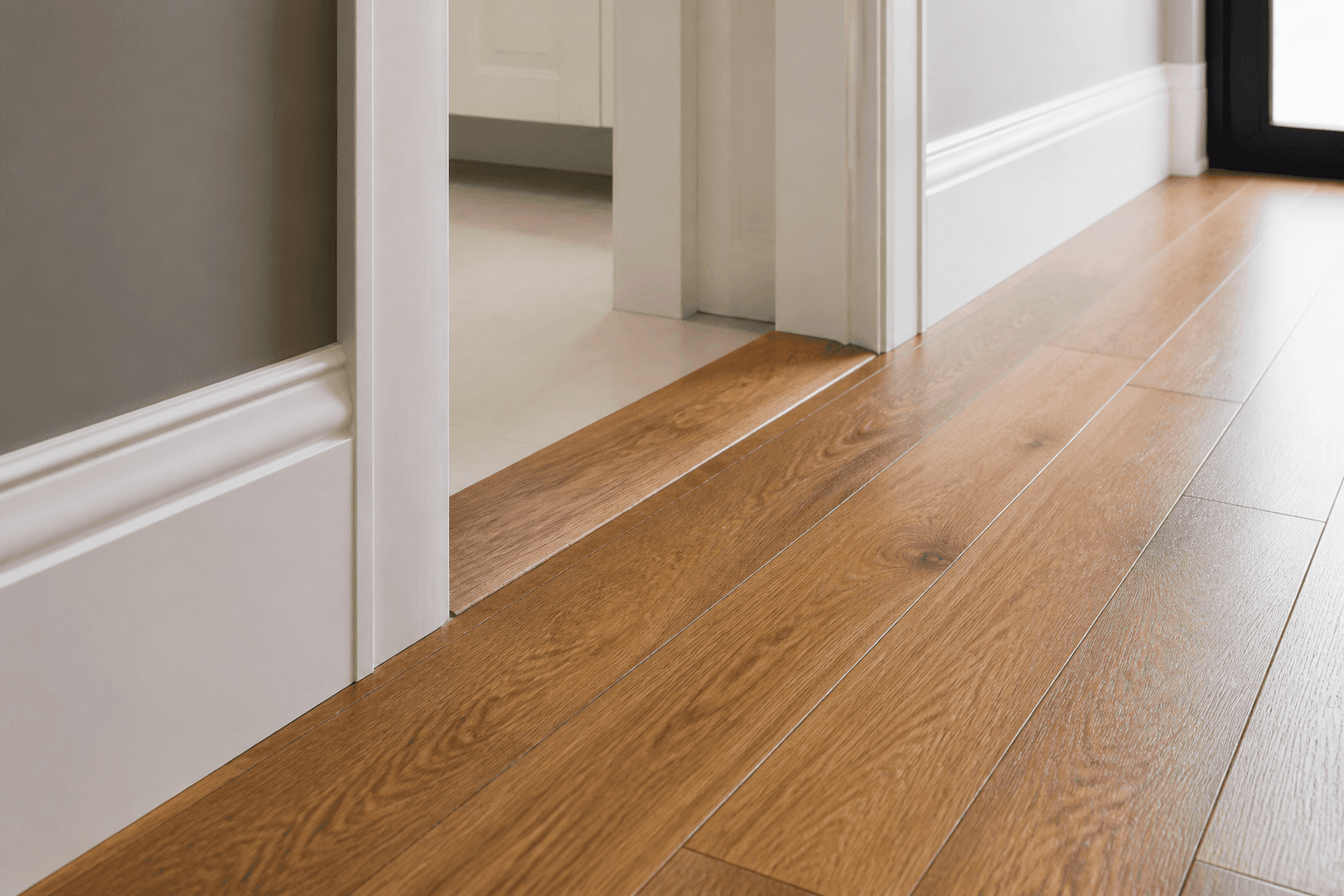
In-floor heat changes the product list
Adding radiant heat to a Toronto bathroom, kitchen, or basement is one of the highest-comfort upgrades available. Adding it without checking the finished floor product first is one of the most common mistakes.
Every flooring manufacturer publishes a maximum surface temperature for their product. Above that temperature, the product warranty is void and the floor can de-laminate, cup, or release adhesive. The numbers vary by category and by individual product.
• Engineered hardwood: typically 27 to 28°C maximum surface temperature.
• Luxury vinyl plank: typically 27 to 28°C; some products are rated to 30°C.
• Solid hardwood: most products are not warrantied for radiant heat installation at all.
• Laminate: typically 27°C; many products are not approved for radiant heat.
• Porcelain tile: no upper limit relevant to residential systems.
• Natural stone: no upper limit relevant to residential systems, but specific stones have thermal cycling sensitivities.
These limits are not advisory. They are the operating envelope inside which the product behaves as designed. A radiant system that runs warmer for a few hours a day will cause problems with most engineered hardwood and LVP within 12 to 24 months.
Electric mat vs hydronic: which Toronto homes use what
Two radiant systems dominate the Toronto market. They look similar but install differently.
Electric mat systems use a thin resistance cable on a mesh, typically embedded in self-leveling compound or thinset under the finished floor. They are best for bathrooms, ensuites, mud rooms, and kitchen islands — single rooms or zones of 200 sq ft or less.
Hydronic systems use tubing carrying warm water from a boiler or heat pump, embedded in concrete slab, gypcrete underlayment, or aluminum heat-transfer plates under the subfloor. They are best for whole-house heating, basement renovations, and primary heating systems.
For a Toronto renovation, the most common use case is an electric mat under bathroom or kitchen tile, often combined with hardwood or LVP through the rest of the home without radiant. Whole-house hydronic is rarer outside of high-end new builds and basement walk-out projects.
The flooring product list narrows differently for each system. Electric mat under tile is a no-compromise choice. Hydronic under engineered hardwood requires careful product selection.
Tile and stone over radiant heat: the default answer
Porcelain tile and natural stone are the flooring products that work best with radiant heat. Three reasons.
• Heat conductivity: tile transfers heat to the room efficiently. The radiant system reaches set temperature quickly and the room responds to thermostat changes.
• Thermal mass: tile holds heat after the system cycles off, smoothing the room temperature curve.
• Material stability: tile does not expand or contract significantly with the temperature swings of a normal radiant cycle.
For Toronto bathrooms, kitchens, mud rooms, and basement bathrooms, tile over electric mat is the standard recommendation. The cost premium over LVP or laminate is partially offset by the longer service life and zero risk of warranty issues.
One caveat: large-format tile (24x48 and up) over electric mat requires extra leveling care. The mat creates a slight variation in substrate height, and large tiles amplify any unevenness into visible lippage.
Engineered hardwood over radiant heat: workable with the right product
Engineered hardwood is the most common warm-feel product Toronto homeowners want over radiant heat. It is possible but requires careful product selection and system operation.
Three product attributes matter.
• Multi-ply or HDF core: a cross-laminated multi-ply or high-density fibreboard core is more dimensionally stable than a lower-quality two-ply construction. The radiant cycle moves wood; stable cores move less.
• Wear layer thickness: 2mm or 3mm wear layers over a stable core are more forgiving than 4mm or 6mm wear layers. Counterintuitively, thinner wear layers move less under thermal cycling.
• Plank width: narrower planks (3 to 5 inches) move less in absolute terms than wide planks (6 to 9 inches). Wide planks are the most common cause of gap and cup complaints over radiant.
For Toronto installations, engineered white oak with a multi-ply core, 2 to 3mm wear layer, and 4 to 5 inch plank width is a defensible default over radiant heat. The product spec sheet must confirm radiant compatibility — not all engineered hardwood is rated for it.
Installation method matters as much as product. Floating engineered hardwood over a radiant slab requires a specific underlayment rated for radiant heat (most foam underlayments insulate too much, defeating the radiant system). Glue-down installation directly to the slab with a radiant-compatible adhesive is usually the most defensible choice.
Luxury vinyl plank over radiant heat: the underdog winner
LVP is increasingly the favored choice over radiant heat in Toronto, particularly for basement renovations. The reasons are practical.
• Heat conductivity: LVP is less conductive than tile but more conductive than hardwood. The room warms reasonably and the system runs efficiently.
• Stability: rigid-core LVP (SPC) does not expand or contract noticeably with normal radiant cycles. WPC (wood-plastic core) is more variable; SPC is the safer choice.
• Cost: LVP over radiant is roughly half the installed cost of tile and one-third the cost of engineered hardwood.
• Comfort: LVP is warm underfoot even without the radiant on. With radiant active, the comfort difference compared to tile is small.
The temperature rating matters. Most LVP is rated to 27 or 28°C maximum surface temperature. Quality SPC products from major manufacturers are rated to 30°C, which gives a more comfortable margin for cold Toronto basements.
For installation, glue-down LVP over a radiant slab is the most defensible choice. The adhesive must be rated for radiant heat — standard pressure-sensitive adhesives can fail at elevated temperatures. Floating LVP over radiant works with the right underlayment but is a less robust system long-term.
Solid hardwood over radiant heat: usually a mistake
Solid hardwood is the product Toronto homeowners most often want over radiant heat and the product least suited to it. The thermal cycling moves solid wood enough to cause cupping, gapping, and squeaking within the first heating season for most products.
A few specific species and configurations can work — quarter-sawn or rift-sawn white oak in narrow planks installed with a specific adhesive on an engineered substrate with active humidity control — but this is a craft-installation specialty rather than a typical residential outcome.
For Toronto homeowners committed to real solid wood, the practical answer is to install solid hardwood in rooms without radiant and use a radiant-compatible product (tile, LVP, or engineered hardwood) in the rooms that need radiant heat. Transitioning between products at doorways is normal and looks fine when planned.
Laminate over radiant heat: avoid unless explicitly rated
Most laminate is not approved for radiant heat installation. The fibreboard core is sensitive to thermal cycling, and the locking joints can lift over time.
Some manufacturers offer specifically radiant-rated laminate with a temperature limit (typically 27°C) and an installation method that includes a thermal break layer. These products work in specific Toronto conditions but are not the default recommendation.
For Toronto renovations considering laminate over radiant heat, LVP at a similar price point and a more defensible thermal performance is almost always the better choice. The marginal cost difference does not justify the warranty risk.
How to operate radiant heat to protect any flooring
Even with a properly rated product, two operational practices extend floor life over radiant heat.
• Gradual ramp-up: bring a new radiant system up to operating temperature over 5 to 7 days, raising the setpoint by 2 to 3°C per day. This lets the flooring acclimate to the warm cycle without thermal shock.
• Avoid running the system above 27 to 28°C surface temperature except briefly. The thermostat air-temperature setpoint translates to a higher surface temperature; a 22°C air setpoint can mean 26 to 28°C at the floor surface. Verify with an infrared thermometer at the floor surface during normal operation.
Also avoid placing thick rugs, large pet beds, or solid furniture pieces directly on radiant-heated floor sections for extended periods. The trapped heat under those items can exceed the floor product rating even when the room thermostat is within range.
For Toronto homeowners with engineered hardwood over radiant, monitoring indoor humidity in the 35 to 55 percent range during the heating season also reduces seasonal cupping and gapping. A whole-house humidifier on the furnace handles this for most homes.
Decision matrix: pick the floor for the heat system
Choose porcelain tile or natural stone over radiant heat if:
• The room is a bathroom, mud room, kitchen, or laundry.
• The radiant system is electric mat under a single room.
• Maintenance, durability, and zero-warranty-risk are priorities.
Choose engineered hardwood (multi-ply core, narrow plank, radiant-rated) over radiant heat if:
• The look of real wood matters in a primary living room or bedroom.
• The radiant system is a whole-house hydronic with stable, moderate operating temperatures.
• Indoor humidity control is in place year-round.
• Glue-down installation with a radiant-rated adhesive is acceptable.
Choose luxury vinyl plank (rigid-core SPC, radiant-rated) over radiant heat if:
• The room is a basement, rec room, or area where waterproofness adds value.
• Budget is constrained and the radiant system is performing for warmth rather than aesthetic.
• A 15- to 20-year service life is acceptable rather than a 30+ year service life.
Skip solid hardwood and standard laminate over radiant heat. The warranty risk and field failure rate are too high to justify the cost difference compared to better options.
Frequently Asked Questions
More Flooring Guides
Related Reading
6 min read
How Toronto Humidity Affects Hardwood Flooring
Toronto homes swing from 60% relative humidity in summer to 15% in winter. Here is what that does to hardwood, and how to install floors that can handle it.
Read guide6 min read
LVP vs Laminate for Toronto Basements: A Decision Guide
Basements punish the wrong flooring choice. LVP and laminate can both work, but they solve different problems. Here is the decision matrix from a Toronto installer.
Read guide4 min read
Hardwood vs Engineered Hardwood in Toronto Homes
Solid hardwood is not automatically better. The right choice depends on the room, subfloor, humidity, and installation method.
Read guideLocal Flooring Pages