
LVP vs Laminate for Toronto Basements: A Decision Guide
Basements punish the wrong flooring choice. LVP and laminate can both work, but they solve different problems. Here is the decision matrix from a Toronto installer.
6 min read | Updated 2026-04-25
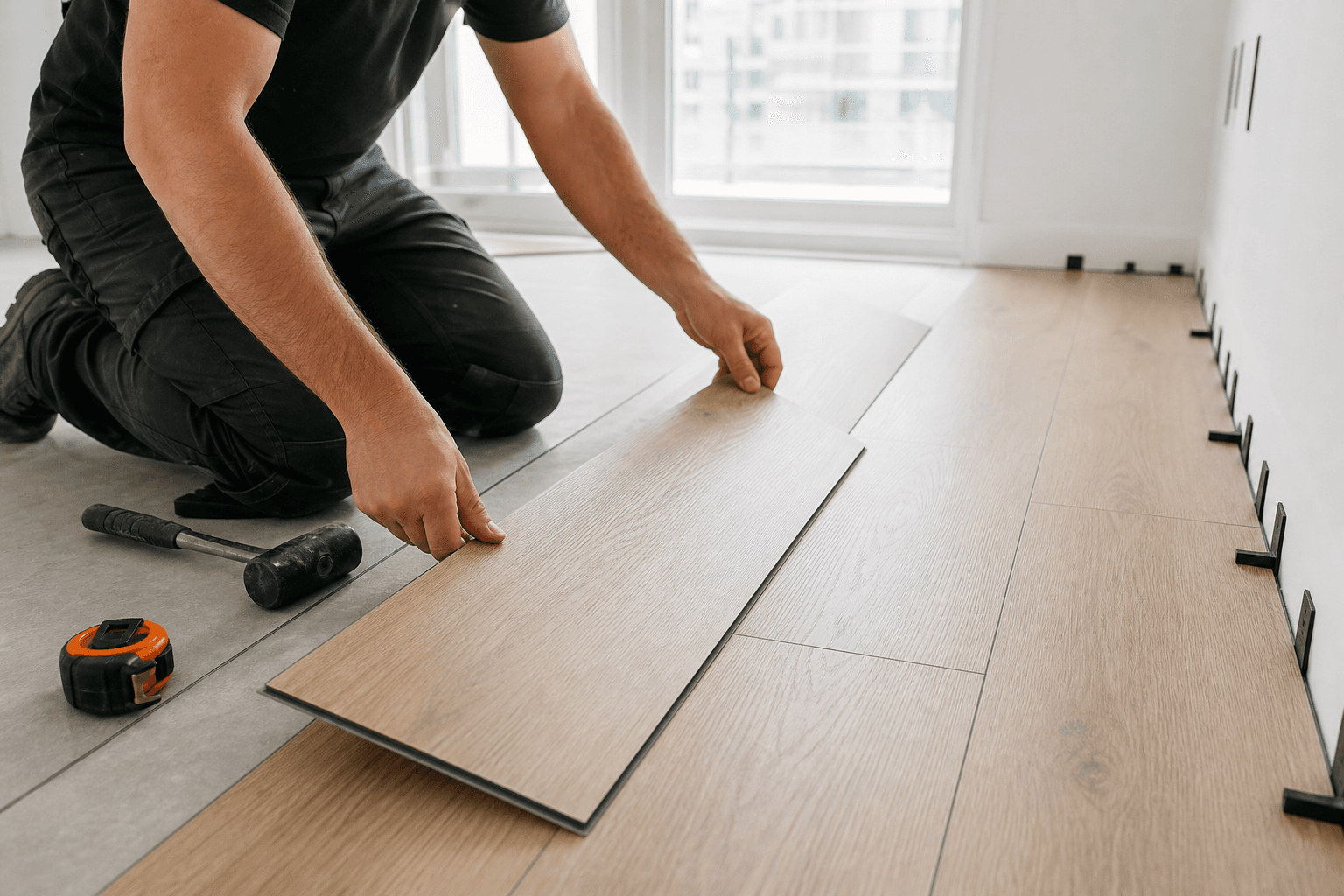
The short answer for Toronto basements
For most Toronto basement flooring projects, luxury vinyl plank (LVP) is the more forgiving choice. It tolerates surface moisture, it can be cleaned aggressively, and modern products mimic hardwood and stone convincingly. Laminate is a valid option when the basement is fully conditioned, the slab is genuinely dry, and the budget rules.
But "LVP is usually safer" hides real exceptions. The full answer depends on slab condition, room use, climate control, and whether the basement has any history of water entry. Here is how to decide.
Moisture tolerance: where LVP and laminate differ
LVP wear layers and cores are typically waterproof or highly water-resistant. The plank itself does not swell when exposed to surface water from spills, a wet boot, or a brief leak. Most LVP manufacturers warranty against surface moisture for a defined period.
Laminate has a fibreboard core. Water that penetrates the seams or edges can swell the core and lift the locking joints permanently. Waterproof laminate exists in 2026 but the technology is younger and the failure mode is less forgiving than LVP.
For Toronto basements with even occasional humidity excursions (summer condensation on uninsulated walls, slow plumbing leaks, sump pump capacity questions), LVP is the safer choice. For dry, well-insulated basements with proven climate control, laminate is acceptable.
Subfloor flatness: stricter than most homeowners expect
Both LVP and laminate require a flat subfloor. Most manufacturers specify flatness within 3/16 inch over 10 feet (some hardwood specs are stricter at 1/8 inch over 10 feet).
Toronto basement slabs frequently fail this spec. Common issues include high spots where the concrete was floated too aggressively, dips near drains, expansion cracks, and old tile thinset that was partially scraped. Self-leveling cement over the affected area is often the fix.
If a click floor is installed over a slab that fails flatness spec, the joints will eventually move, gap, click underfoot, or split. This is the failure mode most basement flooring complaints trace back to — not the product, but the surface beneath.
Comfort, sound, and feel: where laminate sometimes wins
Laminate has a rigid fibreboard core. Over a proper underlayment, it can feel solid underfoot in a way some LVP products do not, particularly thinner glue-down LVP. For bedrooms or home offices where the foot feel matters, laminate can be more comfortable.
Sound: LVP is generally quieter on a concrete slab because vinyl absorbs more impact. Laminate can sound hollow and tap-like over concrete unless paired with a high-density acoustic underlayment.
Warmth: both products feel cold on an uninsulated slab. Neither is a substitute for in-floor heat, but both work with radiant heat systems that are rated for floating floor compatibility. Confirm the specific product temperature rating before installing over heat — some LVP products de-rate above 28C.
The decision matrix: when each material is the right choice
Choose LVP for your Toronto basement if any of the following apply:
• The slab has ever had water entry, condensation, or efflorescence visible.
• The room is within 15 feet of a laundry, sump, mechanical room, or hot water tank.
• Pets, children, or aggressive cleaning are expected.
• The basement is used as a rental or short-term accommodation.
• The product budget is mid-tier or above and long-term durability is the priority.
Choose laminate for your Toronto basement if all of the following apply:
• The slab is verified dry with a calcium chloride or relative humidity test.
• The basement is fully insulated and climate-controlled.
• The room is a bedroom, office, or media space — not a wet-prone area.
• The budget is constrained and a 10-year horizon is acceptable.
• A high-density acoustic underlayment is included.
When neither is the right answer: if the basement has active moisture problems, neither product should be installed until the source is handled. Sealed concrete with epoxy or a polished slab is often the right interim choice while the underlying issue is resolved.
Frequently Asked Questions
More Flooring Guides
Related Reading
8 min read
Vinyl Plank Buying Guide for Toronto Homes: Wear Layer, Core, and Real-World Durability
Two similar-looking LVP products can perform completely differently. Here is how to read a spec sheet — wear layer, core type, and installation method — before you buy.
Read guide8 min read
Flooring Installation for Rental Properties in Toronto: A Landlord Guide
Tenant-grade flooring is not a category. It is a strategy. Here is how Toronto landlords actually choose flooring for rental units — and which trade-offs matter most.
Read guide8 min read
Heated Floors and Flooring Choice in Toronto: What Works Over Radiant
In-floor heat changes which flooring you can install. Some products de-rate above 28°C. Some void warranty over radiant. Here is what actually works.
Read guideLocal Flooring Pages