
Flooring Installation for Rental Properties in Toronto: A Landlord Guide
Tenant-grade flooring is not a category. It is a strategy. Here is how Toronto landlords actually choose flooring for rental units — and which trade-offs matter most.
8 min read | Updated 2026-05-28 | By Flooration Install Team
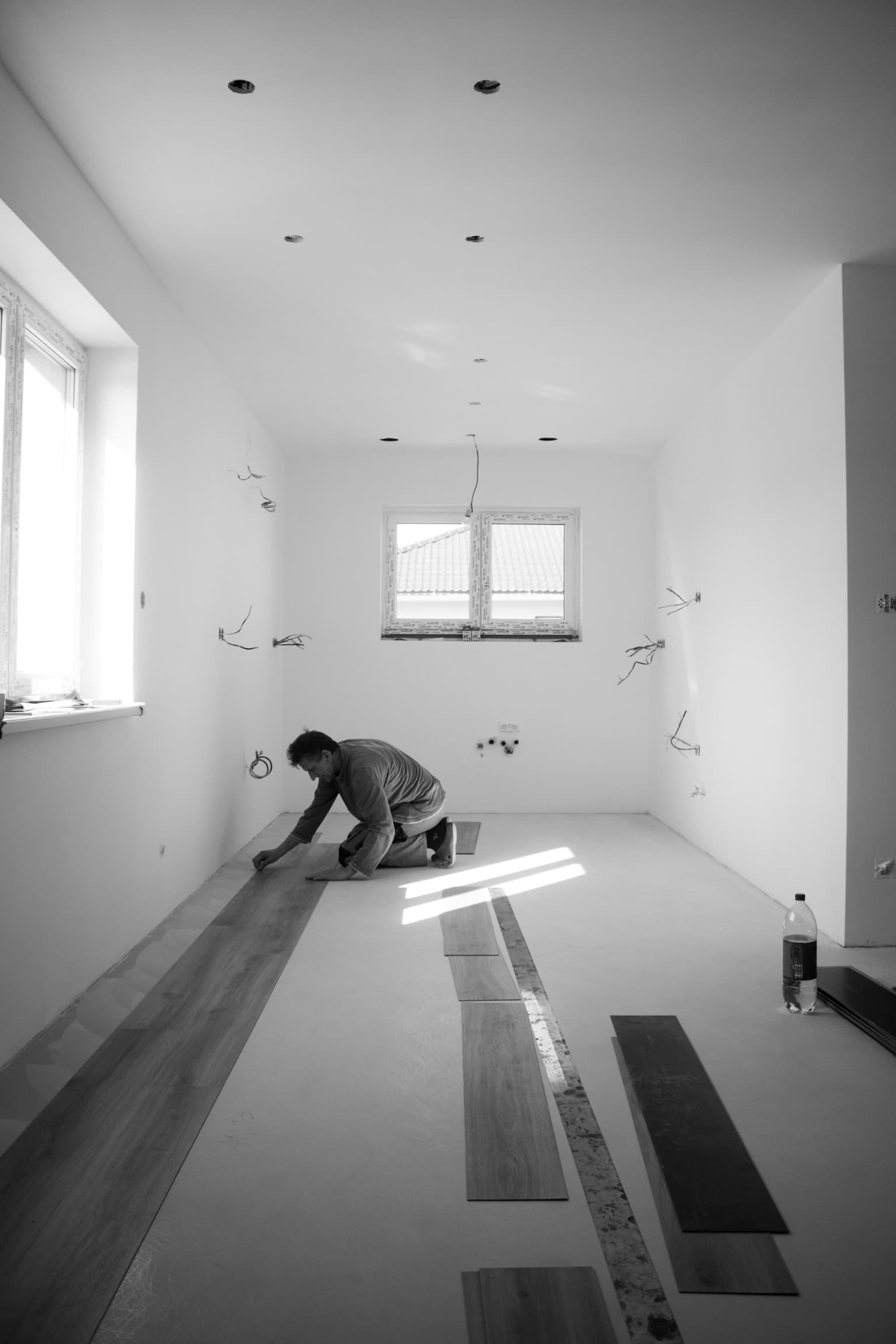
The landlord flooring decision is different from the homeowner decision
Choosing flooring for a Toronto rental property is a different calculation than choosing flooring for an owner-occupied home. The variables shift from comfort and aesthetics toward durability, maintenance cost, turnover speed, and replacement economics.
A homeowner choosing LVP weighs how it feels underfoot and how it looks in evening light. A landlord choosing LVP weighs how it survives ten tenants, how fast it cleans between vacancies, and how much it costs to replace a single damaged plank.
This guide covers the flooring strategies that actually work for Toronto rental properties — condos, apartments, basement suites, and rental houses — from the perspective of landlords and property managers who turn units over every 1 to 3 years.
Luxury vinyl plank is the dominant rental flooring in 2026 Toronto
For most Toronto rental units, mid-tier LVP is the right answer. The reasons are economic and practical.
• Waterproof joints: tenants spill, accidents happen, dishwashers leak. LVP joints survive incidents that would destroy laminate.
• Scratch resistance: a 12 mil wear layer handles typical tenant furniture moves, vacuum traffic, and pet activity without showing damage between turnovers.
• Easy cleaning: standard mopping with neutral cleaner restores the floor. No refinishing required.
• Plank-level replacement: a damaged section can be replaced without redoing the whole floor, provided original product is kept in stock.
• Reasonable cost: tier-2 LVP installed is competitive with laminate when factoring in its longer lifespan.
The practical recommendation is 5mm to 6mm SPC LVP with a 12 mil wear layer and 48 to 60 inch planks. This spec performs reliably across 10 to 15 years of typical Toronto rental use, surviving multiple tenants without intermediate refinishing.
What to avoid in Toronto rental units
Three flooring categories are particularly poor fits for rental properties.
Wall-to-wall carpet on main floors: carpet stains, traps odours, and reaches the end of useful life faster than rental cycles allow for fair amortization. Even in markets where carpet is acceptable to tenants, Toronto rental expectations have moved past it for main-floor living spaces. Carpet remains acceptable on stairs and in bedrooms in some configurations.
Solid hardwood: real wood flooring is beautiful but unforgiving in a rental context. Scratches, water marks, urine stains from pets, and refinishing costs make hardwood expensive to maintain in a property that turns over regularly. Hardwood is appropriate for higher-end rental properties where the rent supports the maintenance, but the per-unit-rent threshold is high.
Cheap laminate: the cheapest budget laminate feels like a savings at install but generates repeat repair costs. Joint swelling from spills, surface scratching, and core damage from heavy furniture moves all show up within the first or second tenancy. Replacement of a single damaged section often requires lifting the floor back to the wall.
Floors that pretend to be premium but are not: ultra-thin LVP, 4 mil wear layers, and budget engineered hardwood marketed as luxury all create disappointing tenant experiences and accelerated replacement timelines. Honesty in spec selection is more profitable than aspirational selection.
Rental floor economics: durability over sticker appeal
The most useful way to think about rental flooring is total durability over its expected useful life, not the upfront number alone. This catches the false economy of cheap flooring that lasts five years versus mid-tier flooring that lasts fifteen.
Builder-grade laminate has an expected useful life of roughly 5 to 7 years before joint damage or wear forces replacement. Mid-tier SPC LVP with a 12 mil wear layer typically lasts 12 to 15 years with normal turnover. Premium SPC LVP with a 20 mil wear layer can last 18 to 22 years.
For typical Toronto rental conditions, mid-tier LVP is the most durable choice relative to how often it has to be replaced. Premium LVP provides a longer maintenance-free window between major work. Builder-grade laminate has to be replaced the most often despite the lowest upfront figure.
For rental properties expected to be held more than 5 years, the math consistently favors mid-tier LVP over builder-grade laminate.
Stairs in rental units: carpet or hard surface?
Stairs in rental units involve a different calculation than open floors. Three considerations matter.
• Safety: hard-surface stairs are slipperier than carpeted stairs. For multi-unit rentals where landlord liability for tenant injury is a concern, carpet on stairs reduces risk.
• Cost: matching hard-surface stairs (LVP or hardwood) are priced per tread and run higher than carpet on a standard staircase. Carpet is also faster to replace between tenancies.
• Aesthetic: matching hard-surface stairs throughout the unit looks more premium and rents at a higher price point. Carpet on stairs reads as more dated to some Toronto tenants but provides function for others.
For most Toronto rental units in the typical rent range, short-pile commercial-grade carpet on stairs is a defensible choice. The lower install cost, faster turnover replacement, and safety advantages typically outweigh the aesthetic premium of matching hard surface.
For higher-end rentals (premium condo units, executive rentals, luxury house rentals), matching LVP or engineered hardwood stairs are appropriate. The rent supports the higher install cost and tenant expectations are higher.
Basement suites and secondary rentals: a different conversation
Basement suite rentals in Toronto have specific flooring requirements that main-floor rentals do not.
• Moisture tolerance: basement slabs have higher moisture transmission than upper-floor subfloors. The flooring product must tolerate this without joint swelling or adhesive failure.
• Sound transmission to the main unit above: in legal duplex configurations, sound rating of the floor system affects compliance with Toronto residential standards and tenant complaints.
• Ceiling height: any flooring system that adds significant build-up height (thicker LVP, underlayment, leveling) eats into already-tight basement ceiling clearances.
For Toronto basement rental suites, SPC LVP with a thin attached pad (1mm to 1.5mm acoustic underlayment) provides moisture tolerance, sound performance, and minimal build-up height. A 5mm SPC plank installed over a slab with this underlayment adds about 6mm total to the floor height, which is workable in most legal basement suites.
For owner-occupied basement spaces converted to rental later, an LVP installation done at the original conversion is more cost-effective than removing carpet or laminate at the rental conversion phase.
Landlord-specific installation considerations
Beyond the product, several installation-phase decisions affect rental property economics.
• Keep extra product in storage: order 10 to 15 percent extra LVP (above the standard installation waste allowance) and store it. A damaged plank from tenant move-in or move-out is then a 1-hour repair instead of a search for discontinued matching product.
• Document the install with photos: a thorough photo record of the new floor at install completion gives a baseline for damage claims at tenant turnover.
• Use consistent product across multiple units: landlords with multiple rental properties benefit from standardizing on a single LVP product across the portfolio. Repairs across units use the same stock. Tenant turnovers can swap planks between units if needed.
• Get a written warranty from the installer separate from the product warranty: a 3 to 5 year installation warranty covers joint failures and installation defects that the manufacturer would not cover.
• Schedule installation between tenants strategically: most Toronto rental turnovers happen in summer (May through August). Installers are busiest in this window and lead times are longest. Installing during winter shoulder seasons can be 2 to 4 weeks faster.
AGI and Toronto rental considerations
In Ontario, flooring upgrades in rental units may qualify for Above Guideline Increase (AGI) rent applications when they meet specific criteria under the Residential Tenancies Act. The flooring must be a capital expenditure (not a repair), it must improve the unit substantially, and the cost must be amortized over the useful life of the improvement.
For typical residential flooring replacements between tenancies (no current tenant), AGI is not relevant — the upgrade is part of routine unit preparation.
For mid-tenancy upgrades, an AGI application may be appropriate. Landlords pursuing this route should keep detailed records of the existing floor condition before replacement, the replacement product specification, the installed cost, and the expected useful life. A qualified installer can provide installation documentation that supports the AGI application; a lawyer specializing in Ontario residential tenancy law should handle the application itself.
For most Toronto landlords, the flooring decision is driven by tenant turnover timing and condition, not AGI optimization. The product selection guidance in this article applies regardless of the rent adjustment strategy.
Summary: the landlord flooring playbook
For most Toronto rental properties, the defensible flooring strategy is:
• Mid-tier SPC LVP with 12 mil wear layer for main living areas, kitchens, and bedrooms.
• Short-pile commercial-grade carpet for stairs and (optionally) bedrooms in lower-tier rental price points.
• Matching LVP on stairs for higher-tier rental price points.
• Standardized product across multiple units in a portfolio.
• 10 to 15 percent extra product in storage for spot repairs.
• Documented installation with photos for damage baseline.
• Annual visual inspection between tenancies, with plank replacement as needed.
This strategy produces a flooring system that survives 12 to 15 years of typical Toronto rental turnover and reads as updated and professional to prospective tenants. Done well, it is one of the most reliable capital investments a Toronto landlord can make in a rental unit.
Frequently Asked Questions
More Flooring Guides
Related Reading
6 min read
LVP vs Laminate for Toronto Basements: A Decision Guide
Basements punish the wrong flooring choice. LVP and laminate can both work, but they solve different problems. Here is the decision matrix from a Toronto installer.
Read guide9 min read
Best Flooring for Pets in Toronto Homes: A 2026 Installer Guide
Dogs scratch. Cats slip. Accidents happen. Here is which flooring actually survives pet ownership in a Toronto home — and which ones get returned after six months.
Read guideLocal Flooring Pages